You're watching:
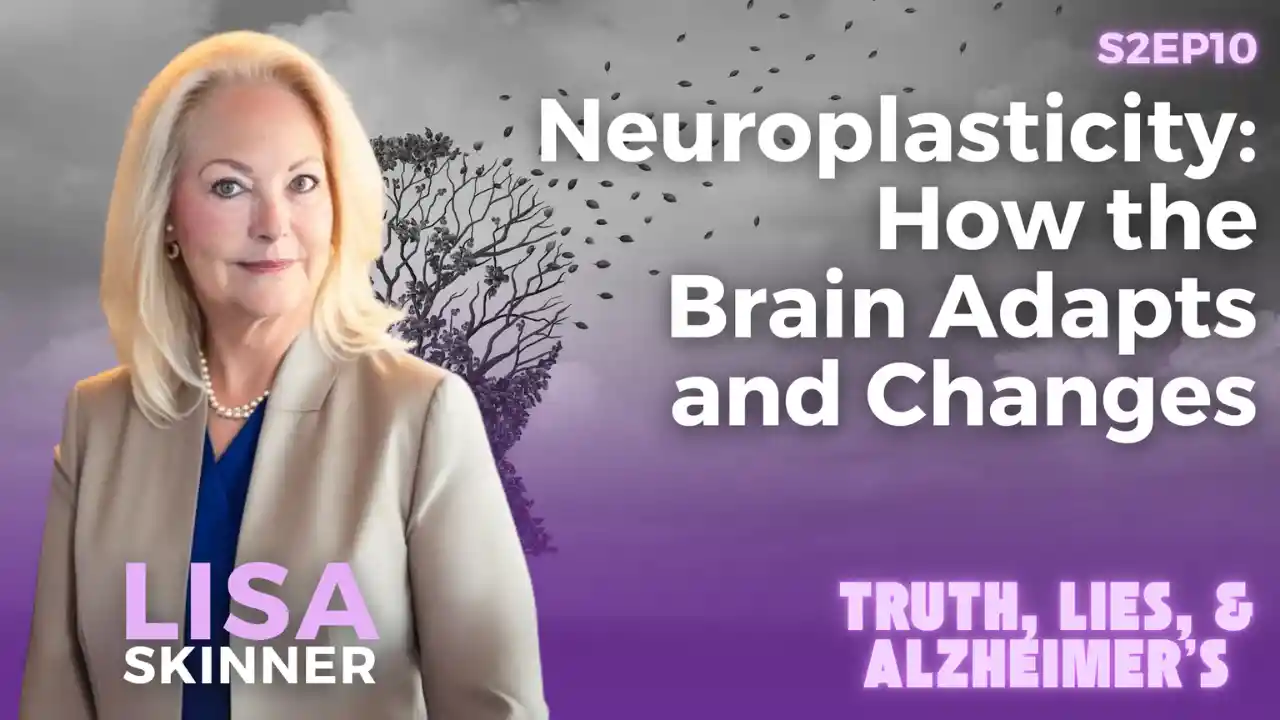
S2E10 - Neuroplasticity: How the Brain Adapts and Changes
In Season 2, Episode 10 of Truth, Lies & Alzheimer’s, we explore neuroplasticity—the brain’s powerful ability to change, adapt, and reorganize itself throughout life.
This episode breaks down the science behind how the brain forms new connections and why learning, experience, and environment matter at every age. Neuroplasticity plays a critical role in memory, recovery after injury, habit formation, and adapting to cognitive changes, including those associated with Alzheimer’s and dementia.
In This Episode, You’ll Learn:
What neuroplasticity is and why it matters
How the brain changes structurally and functionally
Why learning and repetition strengthen neural pathways
The truth behind “use it or lose it”
How neuroplasticity continues into adulthood and older age
Real-World Examples Shared:
How music and skill-based learning reshape the brain
Why trying new activities supports brain health
The impact of meditation and mindfulness on attention and focus
How language learning and cognitive challenges activate new networks
Supporting Healthy Brain Change:
Deliberate and repeated practice
Quality sleep for memory consolidation
Physical movement to support brain circulation
Mental stimulation and novelty
Stress management to protect brain function
A Simple Framework to Apply Neuroplasticity:
Choose a specific skill or behavior to improve
Practice consistently and intentionally
Reinforce progress with rest, repetition, and time
Episode Takeaway:
The brain is not fixed. It is constantly responding to how we think, move, learn, and live. With small, intentional efforts, meaningful brain change is possible at any stage of life.
Source: Sex Differences in Alzheimer Disease Imaging Biomarkers in a Diverse, Community-Based Cohort | Geriatrics | JAMA Network Open | JAMA Network