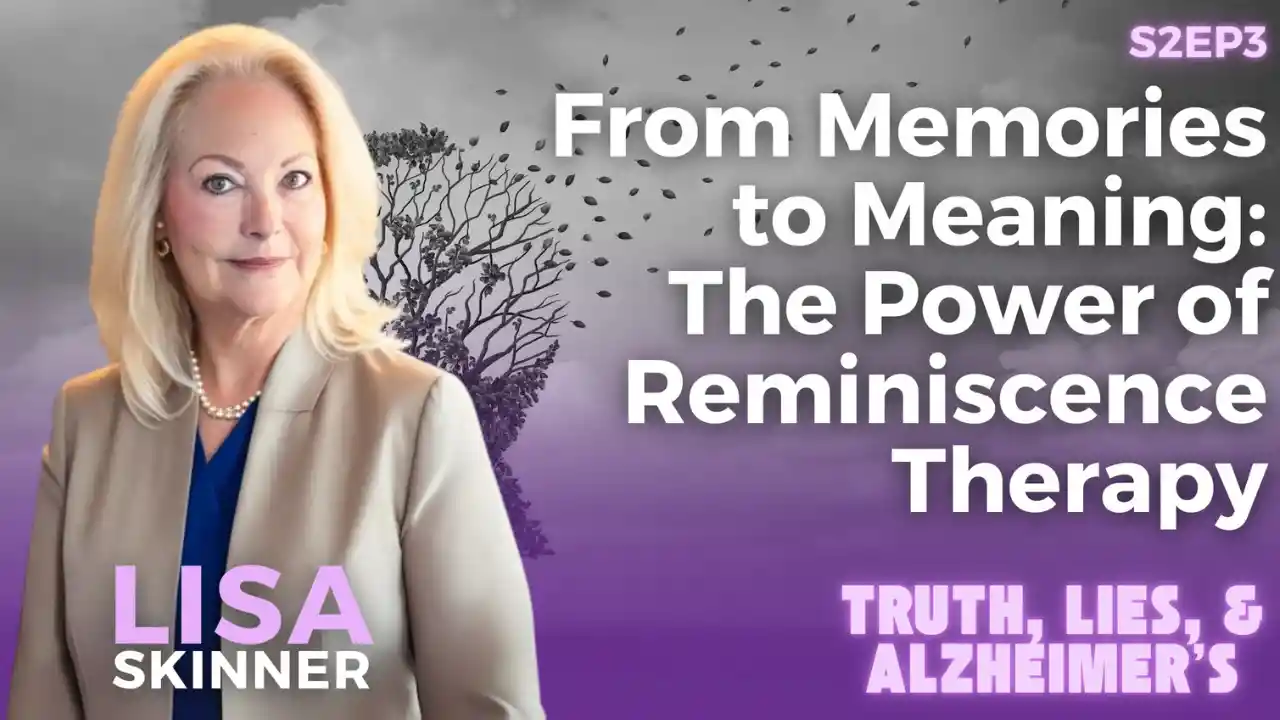
You're watching:
S2E3 - From Memories to Meaning: The Power of Reminiscence Therapy
In this episode, we explore reminiscence therapy, a powerful, non-pharmacological approach that helps people living with Alzheimer’s disease and dementia reconnect with their memories, identity, and sense of self.
Reminiscence therapy uses long-term memories, which often remain accessible even as short-term memory fades. Through familiar photos, music, objects, and storytelling, individuals are invited to reflect on meaningful moments from their past in a supportive and engaging way.
What Viewers Will Learn
What reminiscence therapy is and why it is effective for people living with dementia
How recalling positive life experiences can improve mood and reduce anxiety
Why long-term memory remains more accessible than short-term memory
How reminiscence therapy strengthens relationships between caregivers and loved ones
Ways families and care partners can use reminiscence therapy at home
Key Benefits Discussed
Emotional well-being: Reduced stress, anxiety, and feelings of isolation
Cognitive engagement: Encourages thinking, communication, and interaction
Sense of identity: Helps individuals reconnect with who they are and where they came from
Stronger connections: Creates meaningful moments between individuals and caregivers
Practical Applications
This episode also shares simple, real-world ways reminiscence therapy can be used, including:
Looking through old photographs together
Playing music from a person’s youth
Using familiar objects or scents to spark conversation
Encouraging storytelling without correcting or rushing
We also discuss important considerations, such as recognizing emotional distress and gently redirecting conversations when difficult memories arise.
Why It Matters
Reminiscence therapy reminds us that memory is more than recall—it’s connection. By honoring a person’s life story, we promote dignity, comfort, and meaningful engagement, even as dementia progresses.
This episode highlights why reminiscence therapy is an essential tool in person-centered dementia care, offering benefits not only for those living with dementia, but for families and caregivers as well.