You're watching:
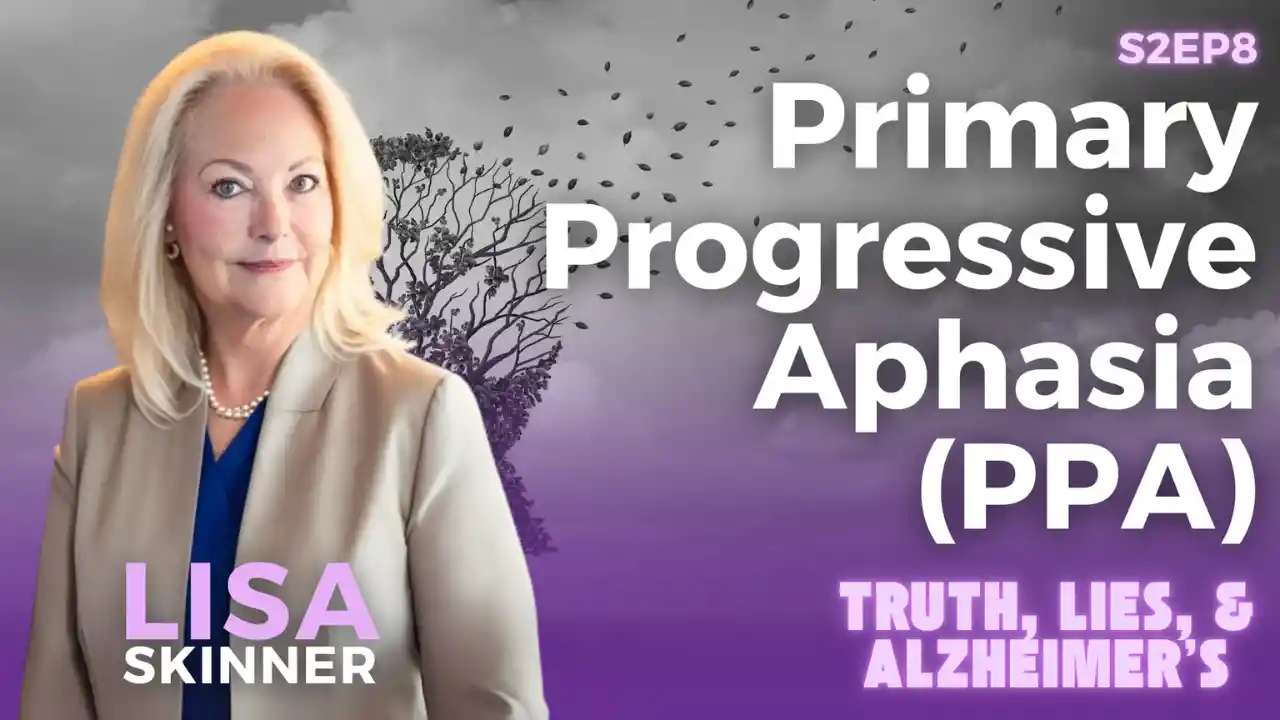
S2E8 - Podcast Show Notes — Primary Progressive Aphasia (PPA)
Primary Progressive Aphasia (PPA) is a neurodegenerative condition that primarily affects a person’s ability to communicate. Unlike aphasia caused by stroke or brain injury, PPA develops gradually and worsens over time, impacting speech, reading, writing, and language comprehension.
In this episode, we clarify common misconceptions surrounding aphasia and dementia, including why aphasia itself is not dementia — but how PPA can be a subtype of Frontotemporal Dementia (FTD). We also discuss why not everyone with aphasia has dementia, and why not everyone with dementia develops aphasia.
Listeners will learn:
- What Primary Progressive Aphasia is and how it differs from other forms of aphasia
- How PPA fits under the umbrella of Frontotemporal Dementia (FTD)
- Early signs of PPA and why diagnosis is often delayed
- The three main variants of PPA:
- Nonfluent/Agrammatic Variant
- Semantic Variant
- Logopenic Variant
- Nonfluent/Agrammatic Variant
- Typical age of onset and how symptoms progress through stages
- Why early diagnosis and supportive therapies matter
This episode also addresses public confusion following high-profile diagnoses and explains the progression from PPA to FTD in some individuals. Understanding PPA helps caregivers and families better navigate communication changes while preserving dignity and connection for as long as possible.